
Purchasing fine jewellery is a personal journey that often begins with understanding the story behind the gemstone. When it comes to natural diamonds, knowing how they are formed, sourced and distinguished can help you make a more informed and confident choice for a piece you will treasure for years to come.
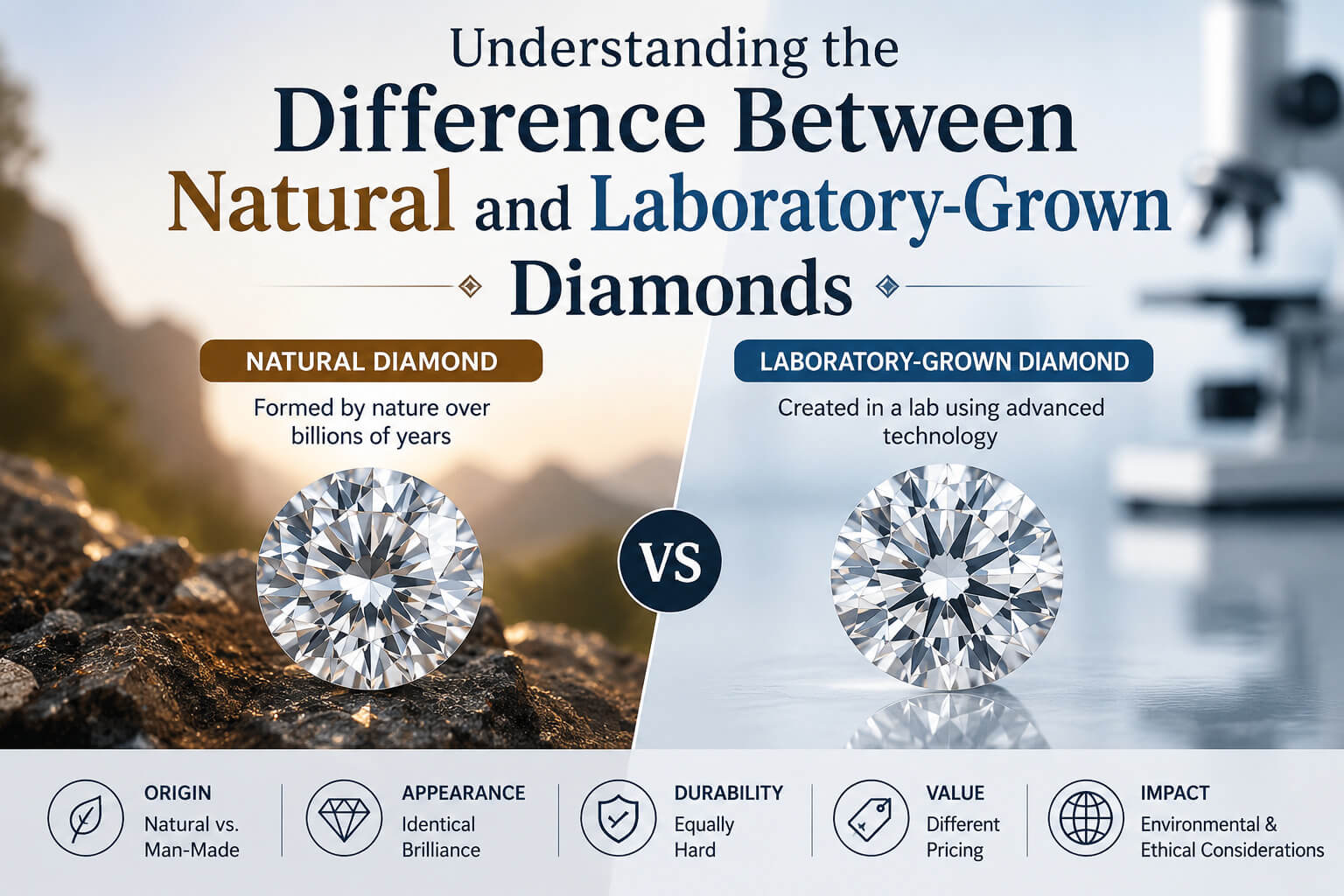
While natural and laboratory-grown diamonds share many physical characteristics, their origins and journeys are at opposite ends of the spectrum. Understanding how these two types of diamonds differ helps you pick a piece that truly aligns with your style and values.
This article explains the key differences between lab-grown diamonds versus natural diamonds and how to identify a natural diamond.
Lab-Grown Diamonds Versus Natural Diamonds: Key Differences
| Feature | Natural Diamonds | Lab-Grown Diamonds |
|---|---|---|
| Origin and Formation | Formed deep within the Earth over billions of years under heat and pressure. | Created in modern laboratories using advanced technology over several weeks. |
| Atomic Structure and Microscopic Marks | Formed under unique geological conditions, resulting in distinct natural patterns in the crystalline structure. | Display specific growth markings and atomic-level variations resulting from factory creation methods. |
| Legal Naming | According to BIS guidelines, the term “diamond” is used for natural diamonds only. Laboratory-grown diamonds must be identified separately. | Must be clearly labelled with descriptors like “laboratory-grown,” “laboratory-created,” or “[manufacturer]-created.” |
| Rarity | Naturally rare treasures with a limited geological supply across the globe. | Unlimited in supply as modern laboratories can continuously mass-produce new stones. |
| Emotional Value | Valued for its rarity resulting from its ancient geological journeys and serves as traditional family heirlooms. | Appeals to buyers seeking a modern, technology-driven alternative. |
How to Identify Natural Diamonds
Look for Inclusions
Natural gems usually contain microscopic inclusions formed during their long journey beneath the earth. A trained eye can spot these organic birthmarks under a magnifying glass and other specialised tools.
Ask a Trusted Jeweller
Experienced jewellers guide you through a gemstone’s origin, quality and certification, helping you make an informed choice. They also help you understand the distinct geological journey behind your chosen gem.
Verify the Laser Inscription
Most natural diamonds carry microscopic numbers etched on their outer edge or girdle. Match it with the number on the accompanying certificate to ensure complete authenticity.
Use Professional Testing
Gemological laboratories utilise advanced equipment to detect subtle atomic structures. They accurately distinguish between natural formation and laboratory growth processes within seconds.
Lab Grown Diamonds Versus Natural Diamonds: Which One Should You Choose
Choosing between these two options depends on personal preferences, values and purpose.
If you appreciate a diamond shaped by nature over billions of years, a natural diamond offers a remarkable connection to the Earth’s history. Each stone reflects a rare geological journey that cannot occur again, giving it a distinct character.
Many people also choose natural diamonds to celebrate important occasions such as engagements, weddings and family milestones because they often carry lasting emotional significance.
Understanding your priorities allows you to choose a diamond that feels right for your personal story.
Final Words
Natural and laboratory-grown diamonds each offer something unique. Understanding their differences helps you choose with confidence. If you value rarity, natural origin and meaningful connections, a natural diamond can be a thoughtful choice.