
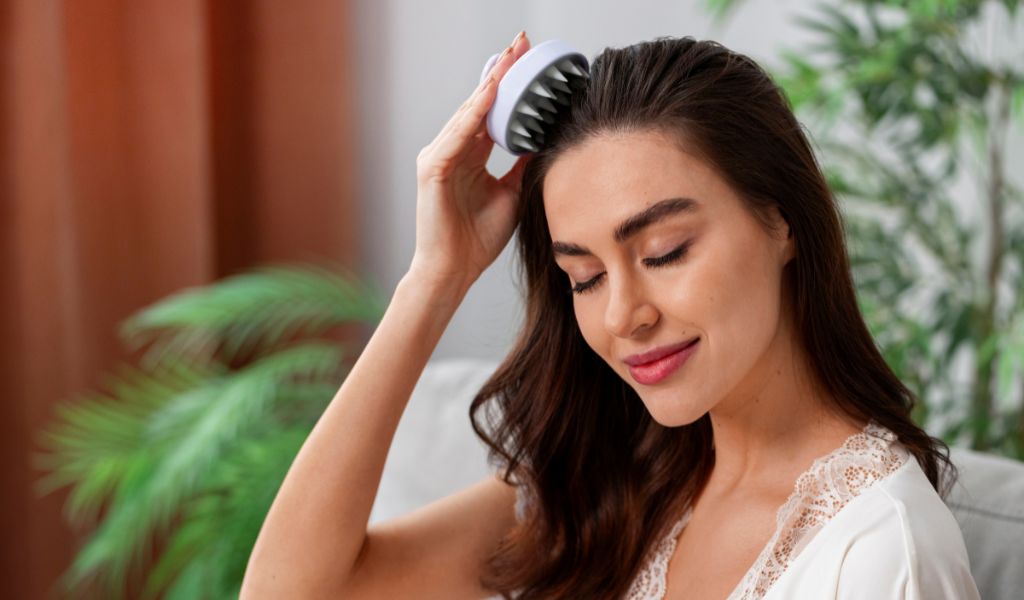
An oily scalp with dry hair can feel difficult to manage. Your roots may look greasy within a day, while the lengths and ends still feel rough, dull, or dehydrated. Many people respond by washing their hair more often or using strong cleansing products. However, harsh cleansing can remove essential moisture from the hair fibre, worsening dryness.
The right approach focuses on balancing the scalp while protecting the hair’s natural softness. A well-planned hair care routine for oily hair helps cleanse excess oil without leaving the lengths feeling brittle.
Why Do You Have an Oily Scalp and Dry Hair?
Your scalp produces sebum, a natural oil that protects the skin barrier and keeps hair healthy. Some people naturally produce more oil due to genetics, climate, hormones, stress, or frequent product buildup. At the same time, the mid-lengths and ends may remain dry because natural oils do not travel evenly through the hair shaft, making it harder to get rid of oily hair while keeping the lengths soft and balanced.
Heat styling, chemical treatments, hard water, sun exposure, and overwashing can also weaken the hair cuticle. This often leaves the scalp greasy while the ends feel dry and frizzy.
People with long hair commonly experience this imbalance because the roots receive more oil than the ends. Curly and wavy hair textures may also struggle with dry lengths because scalp oil does not spread easily through the strands.
Hair Care For Oily Hair
Managing oily roots without drying the hair starts with choosing a balanced cleansing routine. Strong shampoos may temporarily remove grease, but they can leave the scalp feeling tight and the hair rough. Instead, focus on gentle cleansing that removes excess oil while maintaining moisture in the lengths.
- Wash your scalp properly rather than scrubbing aggressively.
- Use lukewarm water because very hot water may stimulate more oil production.
- Concentrate shampoo on the scalp area and allow the lather to rinse through the lengths naturally.
- Conditioner should stay mainly on the mid-lengths and ends.
- Applying rich formulas directly to the scalp may weigh the roots down faster.
- Using lightweight nourishing products can also support smoother hair without adding heaviness.
- Products inspired by moisture-balancing ingredients help improve softness while supporting damaged hair fibres.
- The all-new Pantene Silky Smooth Care is created with the ancient secret of Fermented Rice Water and Pantene’s Patented Pro-Vitamin Formula.
- It helps nourish hair from root to tip while supporting silky smooth hair and protection from damage.
- Fermented Rice Water contains a combination of eight amino acids and vitamins that help care for dry-looking hair without making the scalp feel overloaded.
- When used consistently as part of a balanced routine, nourishing formulas can help manage oily hair while keeping the lengths softer and easier to handle.
Common Mistakes That Make Hair Greasier and Drier
Many daily habits can increase scalp oiliness while drying out the rest of the hair.
Using excessive dry shampoo may leave residue on the scalp and affect freshness over time. Heavy styling products can also build up quickly and make roots appear oily sooner.
Another common mistake is applying too much shampoo in one wash. Double cleansing every day may strip the scalp and trigger more oil production in response.
Frequent touching of the hair transfers oil from the hands onto the scalp and roots. Tight hairstyles can also trap sweat and oil close to the scalp.
Skipping conditioner entirely is another issue. Dry ends need hydration even if the scalp feels oily. The goal is to balance both concerns instead of treating the entire head the same way.
How to Cleanse Without Stripping Moisture
A balanced washing method protects the scalp and hair at the same time.
Start by brushing your hair gently before washing to loosen buildup and distribute oils more evenly. Wet the hair thoroughly before applying shampoo.
Use a moderate amount of shampoo and massage it into the scalp using fingertips rather than nails. Rinse properly because leftover residue can make hair feel greasy.
After cleansing, apply conditioner to the lengths and ends. Leave it for a few minutes before rinsing with cool or lukewarm water.
Hair masks can also help dry lengths recover softness. However, heavy masks should stay away from the scalp area.
Air drying when possible may reduce dryness caused by excessive heat exposure. If you use styling tools, apply heat protection to reduce damage.
How Can You Reduce Hair Oiliness Without Drying Out Your Hair?
Certain ingredients can help keep the scalp feeling fresh while maintaining softness through the lengths. Fermented Rice Water contains amino acids and vitamins that help improve the look and feel of hair, while Pro-Vitamin formulas support smoother, more manageable strands.
As a simple home remedy, try rinsing your hair with diluted green tea or applying aloe vera gel to the scalp before washing. These options may help reduce excess oil while keeping the hair and scalp feeling balanced.
Conclusion
An oily scalp and dry hair do not require aggressive cleansing. In many cases, harsh routines make the imbalance harder to control. A balanced approach that focuses on gentle cleansing, lightweight nourishment, and consistent care usually delivers better results.